Share Button standard

Friday, August 25, 2006

Grace: 1 Today


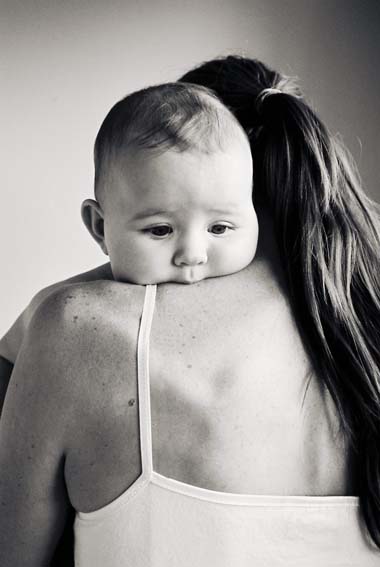
Granddaughter Grace turns one today. Here is a picture taken at her party held last weekend so her Aunty Carissa, home on holiday from the UAE, could attend.

Thursday, August 24, 2006

Workers' rally

The largest gathering of union members seen in Auckland for many years rallied yesterday at Aotea Square against the anti-union, 90-day 'no-rights' bill being promoted by National MP Wayne Mapp. Over 3000 workers were bussed into the central city square by the EPMU, NDU and other unions.
The rally was addressed by Carol Beaumont from the CTU, Andrew Little from the EPMU, Laila Harre from the NDU and Jill Ovens, the new SFWU regional secretary, as well as delegates from worksites.
Union chants rang out across the square drowning out the motorbikes carrying the topless porn stars down Queen St, promoting a porn and sex-toy exhibition 'Erotica'.
Workers responded eagerly to the literature being handed out. The Alliance distributed nearly 1000 copies of its tabloid "The Flame". "Workers Charter" paper was also being handed out.
Workers united, will never be defeated!

Friday, August 18, 2006

Investigate this ...

Ian Wishart continues his anti-Labour crusade in the latest edition (Issue 68, September 2006) of his Investigate rag with a story purporting to raise "allegations of Labour Government interference, and massive election spending" in connection with the Service and Food Workers’ Union (SFWU). Wishart uses an internal financial report of the SFWU to try and prove impropriety on the part of the SFWU in its spending around the General Election last year.
But, as his article concedes, unions can lawfully donate services in support of the Labour Party during an election campaign. The SFWU accounting of those services is not necessarily proof of anything other than just that: an internal accounting procedure. Only $20,000 is claimed to have been donated directly to the Labour Party campaign, despite Wishart’s inflammatory claims of "nearly $240,000 of members’ funds allegedly siphoned off to help Labour".
Caning a union for supporting Labour is like attacking the nails for supporting a house: the unions built the Labour Party and the SFWU, along with the engineers’, dairy workers’ and meat workers' unions are all affiliated to the Labour Party. That means every member of those unions can be considered to be a member of Labour through that affiliation. It is quite legitimate for these unions to give financial and other support to the Labour Party.
It is another matter altogether, however, when an extremist right-wing outfit like the Exclusive Brethren Church spends over a million dollars to attack Labour and the Greens in order to aid the election of the National Party. By thine friends shall thee be known. How about a full-scale investigation into that spending Mr Wishart!
Wishart’s support for the hard-done-by members of the SFWU rings hollow given his right-wing credentials. Wishart is hardly a friend of the workers.
That said, the 10-page article makes disquieting reading for anyone genuinely supportive of the trade union movement. The question that should perhaps be asked is why there is no worker-friendly forum for debate about the issues raised in this article.

Tuesday, August 01, 2006

Jill Ovens – Working-class Hero

Lenin had a phrase for those who throw revolutionary rhetoric around without actually getting their hands dirty in the real work of working class politics; he said such people suffered from "an infantile disorder". Someone anonymously called Jill Ovens "a class traitor" on the NZ-Aotearoa Indymedia site. This is not only the action of a coward who won’t put their name to what they say, but also the pathetic voice of one of the "mere babblers", another apt descriptive phrase of Lenin’s.
Jill’s victory over Darien Fenton’s anointed successor to the Northern region Service and Food Workers’ Union (SFWU) secretary’s position is an extremely important and historical achievement. A socialist in the political tradition of the early Labour Party and the theoretical tradition of Ralph Miliband is now the elected leader of the largest region of the SFWU. Jill will build a model democratic union in the SFWU if she has her way. She has overwhelming support from the organisers and staff, and an impressive mandate from the union membership (via their selected delegates) to do so. This can only be good for the working class.
The SFWU is the largest union of low-paid workers and the Left should get right in behind the project to make it an even more powerful and effective tool to fight for the interests of the most downtrodden workers in NZ. In the process SFWU members will be politicised in ways the current bureaucratic union methods prevent.
For those who condemn her for joining Labour, a little more reading of Lenin might convince you that this was not the actions of a traitor, but rather the actions of a courageous and politically savvy hero of the working class.
It was Jill’s own supporters among the delegates, those who were campaigning on her behalf, who urged her to join Labour. The opposition tactic was to raise the bogey that Jill was not Labour and that it was all an Alliance plot to take over the trade unions.
In her speech to the election conference Jill proudly ‘owned’ her role as the National Council representative on the Alliance caucus and her support for the scrapping of the ECA and the introduction of paid parental leave, both measures that the Alliance had a big hand in implementing. She also said in answer to the ‘Labour’ question from the floor: "I have joined Labour but I don’t want to make a big deal of it. It is of no greater relevance than whether I am Anglican or Catholic, they’re both on the side of God. The Alliance supports workers’ rights after all. The real question is who is the best person for the regional secretary’s job."
The reason for joining Labour was to deflate the opposition tactic of turning the election into one about party affiliation, rather than who was the best person for the job. Lenin would have approved. As he wrote in "Left-wing" Communism, An Infantile Disorder:
"One must use one’s own brains and be able to find one’s bearings in each particular instance. It is, in fact, one of the functions of ... leaders worthy of the name, to acquire ... the knowledge, experience and – in addition to knowledge and experience – the political flair necessary for the speedy and correct solution of complex political problems."
The SFWU election posed multiple complex political problems for the challenger. Success required the most careful attention to tactics (there is no winning strategy without winning tactics).
"It is entirely a matter of knowing how to apply these tactics in order to raise – not lower – the general level of proletarian class-consciousness, revolutionary spirit, and ability to fight and win" (Lenin again). Note; the "ability to fight and win": this is what raises the consciousness of workers, and the members of the SFWU have gained a major win over the undemocratic, bureaucratic methods of the previous administration of the SFWU.
Lenin hammers home the point in the closing sentence of his chapter entitled "No Compromises?": "... political leaders of the revolutionary class are absolutely useless if they are incapable of ‘changing tack, or offering conciliation and compromise’ in order to take evasive action in a patently disadvantageous battle." The road to political success takes many twists and turns. Sometimes you have turn back temporarily to get around obstacles in your way before you move forward again.
Jill Ovens evaded the battle over party affiliation in order to ensure a win in the battle that mattered; the battle for the delegates’ votes. I supported this course of action. We flew by the seat of our pants a lot, but in the end we did not make any major blunders that would cost Jill the election, nor did we allow our opponents the chance to make much lee-way. Jill won handsomely; that was the testament to her tactical acumen (as well as her working-class politics).
Jill had good reasons to step back from the Alliance, and joining Labour does not mean she thinks there is no place for the Alliance. On the contrary the Alliance has a very important role to play as the socialist and left conscience of the wider labour movement. Many people who are Labour Party members and supporters acknowledge this, and the more the Left maintains a principled, ‘united front’ position with Labour and trade union people, the more credibility our left-of-Labour message will garner.

Friday, July 28, 2006

Jill Ovens Wins SFWU Election - Speech

Scenes of jubilation and tears of joy greeted the stunning victory by Jill Ovens in yesterday's election for the new Northern Region Secretary of the Service and Food Workers' Union (SFWU). The special delegates conference of 112 voting delegates gave Ms Ovens the clear mandate of a 68 to 44 winning result. Ms Ovens upset success over Lisa Eldret, Darien Fenton's anointed successor, was achieved in spite of repeated and sustained interference in the election process by the new Labour MP.
A Pacific Island woman, a delegate from a hospital in South Auckland, rang me this morning and said; "Shame on her", in reference to Fenton’s attendance at the conference. This delegate rang up all her fellow Pacific Island voting delegates in the week before the election to get them to vote for Jill. She said she supported Jill because she not only talked the talk, she also walked the talk. "Jill was always there for us", she said.
Below is a copy of the speech given by Jill Ovens to the voting delegates. One delegate who works on a well-known food factory site told Jill afterwards that hearing her speech made him feel for the first time what it really meant to "be union".

JILL’S SPEECH
Speech removed by requset of Jill Ovens. Jill wants a "clean start" for the SFWU in the Northern Region and feels her speech should remain internal to the union.

Wednesday, June 07, 2006

Greens leave Left political space to the Alliance

Nandor Tanczos may have lost the Green leadership race to Russel Norman, but he re-ignited the "neither left nor right" debate within the Green Party.
The real problem for the Greens is their refusal to acknowledge that we live in a class divided society. The so-called ‘left-right’ political continuum is one with a fracture right through it. ‘Which side are you on?’ is the question the Greens have to answer.
Both the co-leaders elected at the Green’s Queen’s Birthday weekend conference questioned their party’s support for a Labour-led government. Russel Norman, the new male co-leader, attacked the Cullen roading budget and maintained that on some important issues there was "barely a whisker between National and Labour". He rejected the Greens being a "clip- on to Labour" and made it clear they would be willing to work with National or Labour, depending on their position on "unlimited growth ... in a finite world".
Jeanette Fitzsimons expressed a similar view. She said the Greens might support a tax-cutting National budget over a Labour one that spends money on roads. She also said that the Greens reject a "big, all- powerful state" which she acknowledged was a similar position to that of some on the right-wing of politics.
The Green Party’s scramble to keep a position of "independence" leaves a big hole on the left of the political spectrum for a party that openly takes sides with the working and oppressed people of society.
The Alliance comes down firmly on the side of the working classes and openly opposes the domination of big capitalists. The Green concerns with ecological degradation, concerns that the Alliance shares, cannot be solved by the same market mechanisms that create the environmental problems we all face.
It is not a choice between big-state domination versus big- capitalist domination, rather one of a peoples’ democratically controlled and run society versus a market-driven one.
A party to the left of Labour needs to carve out a support base among the working class people that traditionally vote Labour. The Labour Party has adapted all too well to the status quo society over the 70 years of its existence, and only partially, at best, represents the interests of low-income New Zealanders who vote for it.
More than 70 per cent of voters in the deprived electorate of Mangere supported Labour in the last election. They are still suffering from a huge social and economic deficit after more than six years of a Labour government yet this vote was given faithfully in the absence of a more credible left alternative.
Those on the left should work for the defeat of National and other forces of the political right, while building a credible alternative to Labour.
If the Greens stand in the middle of the road, they risk being road- kill.

Friday, May 26, 2006

SFWU members reject rule change

The northern region Service and Food Workers Union members rejected the rule change up for endorsement at their recently completed round of Annual General Meetings. Over 1500 members voted at the AGMs in the Northern Region of the SFWU. A majority voted against Resolution 1, the resolution that sought retrospective endorsement of the new method of electing the leadership of the union. This method entails elections being held at conferences of selected delegates instead of by an all-up membership vote (note; NOT elected delegates – the "s" makes democracy into demockracy). The re-endorsement of these rules was made necessary because of the inadequacy of the notification given to the members for the meetings they were originally passed at in 2004. [See my previous post on this topic].
Northern region members managed to vote down the rule change despite up to a dozen extra site meetings being convened at short notice by the Acting Regional Secretary, Lisa Eldret. These were held at times and places in a manner that mostly excluded oppositional views. At these improperly notified ‘secret’ extra meetings where only the dubious ‘vote yes’ arguments were put to those attending, the members loyally voted in favour of the resolutions. At other meetings where members opposed to the adoption of the new rules were able to put an alternative view, the vote went overwhelmingly against the rule change.
A complaint to the returning officer about the holding of meetings that were not notified two weeks in advance to every member as specified in the union's rules was brushed off. The reply said that only a "technical breach" of the rules had been committed and because the national result was overwhelmingly in favour of the resolutions, no action needed to be taken.
The rules have been endorsed by the union nationally and therefore all the leadership elections will now be conducted in the way specified; viz conferences of selected delegates will do the voting rather than the whole membership.
An election policy has been drawn up in consultation with (but not necessarily with the agreement of) interested parties such as Jill Ovens who is contesting the northern region secretary position. A random selection process (ie drawing the names out of a hat) will be used to choose the delegates to attend the election conference. The delegates will be chosen proportionately by industry in accordance with the industry spread of the membership. The policy appears to seek to restrict candidate campaigning activities to making contact with the delegates selected to attend the election conference. The selection process will not be completed until about two weeks before the election.

Monday, May 22, 2006

What is to be done?

Some useful and inspiring quotes from the man who wrote "What is to be done?" in 1901-1902.
Page numbers from the 1973 Progress Publishers pamphlet reprint
Lenin on the need for organisation (Section I A, p11)
We are marching in a compact group along a precipitous and difficult path, firmly holding each other by the hand. We are surrounded on all sides by enemies, and we have to advance almost constantly under their fire. We have combined, by a freely adopted decision, for the purpose of fighting the enemy, and not of retreating into the neighbouring marsh, the inhabitants of which, from the very outset, have reproached us with having separated ourselves into an exclusive group and with having chosen the path of struggle instead of the path of conciliation. And now some among us begin to cry out: Let us go into the marsh! And when we begin to shame them, they retort: What backward people you are! Are you not ashamed to deny us the liberty to invite you to take a better road! Oh, yes, gentlemen! You are free not only to invite us, but to go yourselves wherever you will, even into the marsh. In fact, we think that the marsh is your proper place, and we are prepared to render you every assistance to get there. Only let go of our hands, don't clutch at us and don't besmirch the grand word freedom, for we too are "free" to go where we please, free to fight not only against the marsh, but also against those who are turning towards the marsh!
Lenin on the need for alliances (Section I C, p18)
Only those who are not sure of themselves can fear to enter into temporary alliances even with unreliable people; not a single political party could exist without such alliances.
Lenin (and Pisarev) on dreaming (Section V B, pp166-167)
And if indeed we succeeded in reaching the point when all, or at least a considerable majority, of the local committees local groups, and study circles took up active work for the common cause, we could, in the not distant future, establish a weekly newspaper for regular distribution in tens of thousands of copies throughout Russia. This newspaper would become part of an enormous pair of smith's bellows that would fan every spark of the class struggle and of popular indignation into a general conflagration. Around what is in itself still a very innocuous and very small, but regular and common, effort, in the full sense of the word, a regular army of tried fighters would systematically gather and receive their training. On the ladders and scaffolding of this general organisational structure there would soon develop and come to the fore Social-Democratic Zhelyabovs from among our revolutionaries and Russian Bebels from among our workers, who would take their place at the head of the mobilised army and rouse the whole people to settle accounts with the shame and the curse of Russia.
That is what we should dream of!
"We should dream!" I wrote these words and became alarmed. I imagined myself sitting at a "unity conference" and opposite me were the Rabocheye Dyelo editors and contributors. Comrade Martynov rises and, turning to me, says sternly: "Permit me to ask you, has an autonomous editorial board the right to dream without first soliciting the opinion of the Party committees?" He is followed by Comrade Krichevsky; who (philosophically deepening Comrade Martynov, who long ago rendered Comrade Plekhanov more profound) continues even more sternly: "I go further. I ask, has a Marxist any right at all to dream, knowing that according to Marx, mankind always sets itself the tasks it can solve and that tactics is a process of the growth of Party tasks which grow together with the Party?"
The very thought of these stern questions sends a cold shiver down my spine and makes me wish for nothing but a place to hide in. I shall try to hide behind the back of Pisarev.
"There are rifts and rifts," wrote Pisarev of the rift between dreams and reality [Pisarev was a 19th century Russian intellectual and a leading exponent of ‘social utilitarianism’. He held that all art and intellectual endeavour was useless unless it aimed ‘to solve forever the unavoidable question of hungry and naked people’ L.R.]. "My dream may run ahead of the natural march of events or may fly off at a tangent in a direction in which no natural march of events will ever proceed. In the first case my dream will not cause any harm; it may even support and augment the energy of the working men.... There is nothing in such dreams that would distort or paralyse labour-power. On the contrary, if man were completely deprived of the ability to dream in this way, if he could not from time to time run ahead and mentally conceive, in an entire and completed picture, the product to which his hands are only just beginning to lend shape, then I cannot at all imagine what stimulus there would be to induce man to undertake and complete extensive and strenuous work in the sphere of art, science, and practical endeavour.... The rift between dreams and reality causes no harm if only the person dreaming believes seriously in his dream, if he attentively observes life, compares his observations with his castles in the air, and if, generally speaking, he works conscientiously for the achievement of his fantasies. If there is some connection between dreams and life then all is well."
Of this kind of dreaming there is unfortunately too little in our movement. And the people most responsible for this are those who boast of their sober views, their "closeness" to the "concrete" ... .

Friday, May 05, 2006

Government does not go far enough with "unbundling" Telecom

The Government has not gone far enough with its "unbundling" proposal to deal with Telecom’s monopoly of the telephone lines. I agree with the separation of the telephone lines from Telecom’s broadband business, but the "local loop" lines should then be brought back under public ownership.
Monopoly ownership has allowed Telecom to gouge monopoly profits since it was privatised in 1990 by the infamous Rogernomics Labour Government of the day. When Telecom won the 2004 CAFCA Roger award for the worst multi-national, financial analyst, Sue Newberry, showed that Telecom was making over 25 per cent annual returns on its New Zealand assets year after year.
This is why telephone line and mobile call charges are so high in this country – to keep Telecom’s shareholders rubbing their hands when the $800 million profit is paid out each year. The way to stop this is to put this essential infrastructure asset under public ownership and control so it delivers an efficient, modern service at the cheapest possible cost to its customers.
The National party is defending Telecom’s monopoly position, saying that the "market" should be left to decide if, how and when broadband technology should be delivered.
This is like saying the weather should be left to decide which homes are washed away by floods, or the fox should be left in charge of the chickens. National believes this will deliver the best outcomes for New Zealand. As the ads say – "Yeah right!" Telecom’s success in preventing any real competition, along with its deliberate strategy of paying out maximum dividends rather than investing in the development of modern broadband infrastructure, gives lie to that argument.
Since 1986, when privatisation of state-owned assets began, New Zealand has been gold-rush territory for big capitalist concerns. The strategy of these largely foreign investors is one of ‘pump and dump’ – pump the profits out and dump the asset after the vampire urges of these asset strippers is satiated. Then the next lot moves in to take their share – precious little of the private capital investment that we were promised by the promoters of privatisation has ever occurred. Instead New Zealand’s vital transport, energy, communications and other economic infrastructure has been degraded to crisis point in many cases.

Sunday, April 30, 2006

SFWU AGMs Oppose Rule Changes

Service and Food Workers Union (SFWU) members in Auckland are rejecting the rule changes proposed by their leadership that would deprive them of the right to directly elect their leaders.
The rules being voted on at the round of Annual General Meetings currently under way around the country provide for the national and regional leadership of the SFWU to be elected at delegates’ conferences rather than by the votes of all members. The make-up of these delegates’ conferences is not decided by the members. Rather the delegates who wish to attend are required to submit a written "expression of interest" in attending. The National or Regional executives then determine the size and composition of the delegates’ conference to elect the leaders whose positions are up for election.
At the national level, the elected positions concerned include the National Secretary (a full-time paid position) and the National President (an unpaid, voluntary post). The three Regional Secretaries (full-time paid officials) and Regional Presidents (again, unpaid volunteers) would be elected the same way at the regional level. (The SFWU is essentially a federation of three regions, Northern – with the largest membership – Central, and Southern.) The Secretaries have a four-year term, the Presidents face re-election every two years.
Given that the Regional Secretaries and Presidents sit on (and have a big influence in determining the membership of) their respective Regional Executives, and the National Executive includes the National Secretary and President as well as the six aforementioned regional officers, there are clear conflicts of interest in this arrangement.
The people seeking re-election are effectively in charge of the process of selecting the people who will be voting for (or against) them in the elections held to fill the positions they, as incumbents, currently hold.
The rule changes were rammed through the union’s 2004 Northern Region conference by Darien Fenton, before she won a Labour Party list seat in Parliament in September 2005. The official registration of the new rules took place on September 21, just days after the election result was known.
However, these new rules were required to be re-submitted to the membership this year after the union obtained legal advice that the rule-change meetings held in 2004 had not been properly notified.
This puts the union in a quandary as the current National Secretary was elected under the newly registered rules after the position of National Secretary was vacated by Darien Fenton on her accession (or is that ascension) to parliament.
The four omnibus resolutions being put to the membership seek: (1) the membership’s endorsement of the 2004 rule changes; (2) their acceptance of the result of the elections already held under these rules; (3) their approval of the actions taken by the officers of the union (principally John Ryall) since their election under the faulty 2004 rules; (4) their endorsement of some further (2006) rule changes that seek to make the rules consistent with the intentions of the earlier (2004) changes.
In Auckland, concerned members and delegates have circulated letters and leaflets, exercised their rights to speak at meetings, and otherwise organised to oppose the recommended resolutions. The result is that where there has been debate at the AGMs on the rule changes they have been overwhelmingly rejected in all but one or two meetings. At one stage the votes were running two to one against. Only the late night convening of some factory site-meetings where oppositional voices were not able to be heard has partially rescued the situation for the leadership.
The most startlingly shocking aspect of the AGMs has been the direct intervention of Darien Fenton MP into the voting process. Fenton, whose office is on Auckland’s North Shore, has attended several AGMs and spoken in favour of the Resolutions. Many members see this as inappropriate and an attempt to wield undue influence. Despite Fenton’s best efforts meetings like the large one held at the Papatoetoe Town Hall last week have still voted down the resolutions (134 against, to 92 for, on Resolution 1 at this meeting).
After the Papatoetoe meeting, Fenton was observed haranguing a delegate who had spoken strongly in defence of union democracy and against the resolutions. The delegate was visibly shaken by the vehemence of Fenton’s verbal assault on him.
The rule change debacle has impacted on the election of Fenton’s successor as SFWU Northern Region Secretary (Fenton was a dual office-holder before her departure to Parliament).
The Union’s Rules require an election to be held to fill the vacant Northern Region Secretary position. Nominations were called last December but the election still has not been held. It has been postponed twice; once in February because of improper notification (this seems to be an endemic problem for the SFWU), and secondly in March after the election rules themselves came into question. The election will now not be held until June, after the completion of the round of AGMs and the ratification (or not) of the Rule changes.
Fenton’s anointed successor, one Lisa Eldret (Fenton’s "wing-person" and Assistant Regional Secretary in the Northern office), is being strongly challenged by the experienced and respected trade unionist Jill Ovens. Ovens is the former full-time, paid President of ASTE, the technical teachers’ union, and was until recently the CTU Women’s Convenor and representative on the CTU National Affiliates Council.
Ovens has been a senior organiser with the SFWU in the health and aged-care sectors (Northern Region) for the last year and a half, and now heads the "Healthy Pay, Healthy Hospitals" campaign in the region. She has gained the respect and support of the Northern SFWU office staff and organisers, as well as the members and delegates she has been working with.
A suspicious mind might think the real reason the election has been postponed twice is because the "numbers" were against the chosen one. An old adage of Labour Party politics is that you never hold a vote unless you know in advance that the outcome will be favourable to you.
The SFWU is a living example of the operation of the "iron law of oligarchy" that the sociologist Robert Michels exposed in the German workers’ movement nearly one hundred years ago. Michels examined how large organisations, particularly trade unions and political parties, tend to create structures that perpetuate the status quo and undermine their own internal democracy even though they may be publicly committed to defending democracy in society as a whole. Control of information, resources, staffing, and election processes are the means by which incumbent leaders maintain their power. Michels was extremely pessimistic that anything could be done to combat this tendency (hence his description of it as an "iron law").
Well, members of the SFWU in Auckland (and possibly the rest of the Northern Region) give supporters of union democracy reason for optimism. They are showing at their AGMs that it is not true that "oligarchy" always triumphs. The members have a voice and they are showing that they know how to make it heard.

Grace - some photos - 6-7months


Tuesday, April 04, 2006

Police rape trial

It is inspiring to see brave women standing up against rapists. The police cannot sweep this one under the carpet. Only a police force based on, and in, the community can be relied upon. Bullies and power-trippers have no place in society's internal defence force.